Gather data first, test small, scale what works, then check the route. This is the order I follow when I start with a new brand, and the lesson about pressure that taught me to hold to it.
Every new brand wants results fast, and I understand why. But the first 90 days go better when I know what I am doing in each month and why. This is the order I follow, and what I learned the hard way.
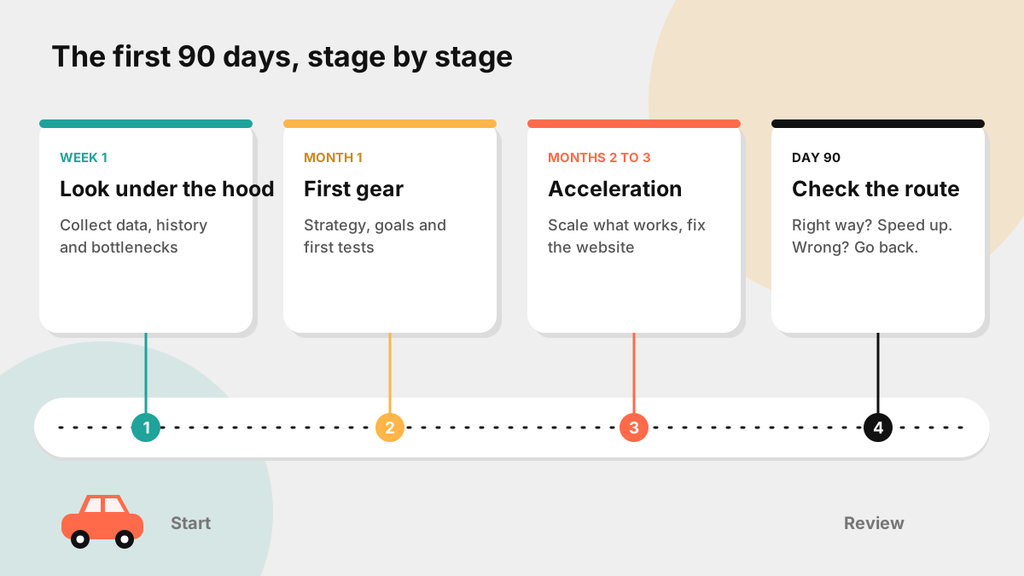
Week one: look under the hood
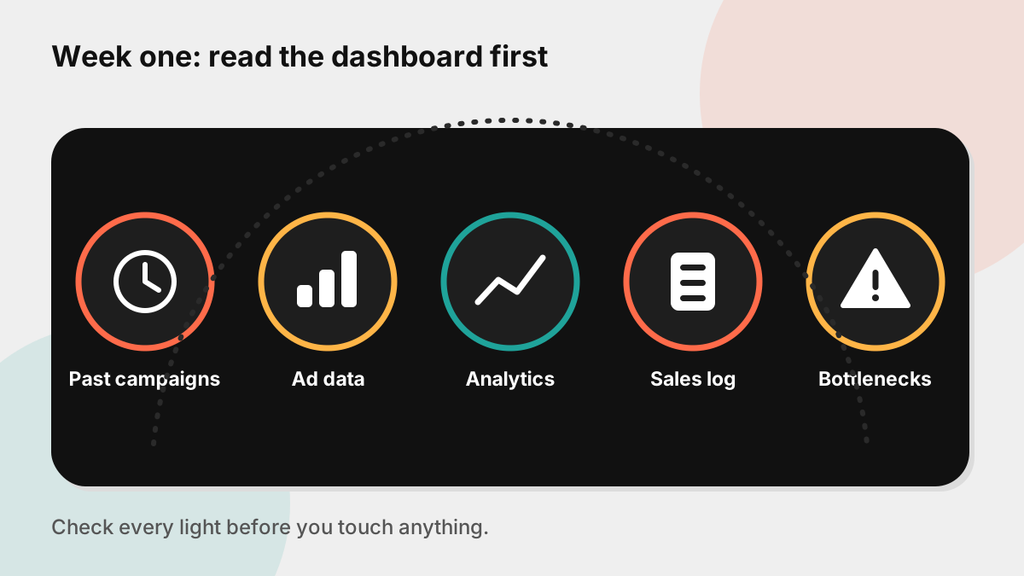
The first week is for collecting information. What did the brand do before, and what happened? What do the ad accounts and analytics say? Where is the business now, and where are the bottlenecks? I want to know what we have and what we want. I add my own view on top, but only after I have seen the data.
Until this is done, I do not change anything, not even a small thing. Without data and an analysis of earlier results, every decision is a guess. It is the one rule I hold to without exceptions.
Month one: first gear
In the first month I set the strategy: goals, a roadmap and the measures we will use to judge progress. Then the first version of the work starts. Mostly that means preparing new content and running test ads. If things go well, the main work can begin before the month ends.
The early tests answer a few basic questions. Which content works, which offer works and which audience responds. They are there to learn, and big results can wait.
Budget belongs here too. I split it by the plan, with some room for error, and I know in advance how much goes to which goal in which month. Without that, a month can turn into chaos. A test ad takes off early, you move the money planned for engagement onto it, and now two parts of the plan are colliding.
Months two and three: acceleration
When the tests are finished, I scale the ads that worked, and the other parts of the strategy start to run. The website usually comes into play here. If one exists, I improve it and build landing pages that fit the ads. If it does not, it has to be built. I coordinate this with the client’s in-house team, or, when there is none, we agree on a plan and I refer the work to people I trust.
Day 90: check the route
After three months I look at overall progress: where we started and where we are now. Ads get analyzed often, as part of the regular work. I evaluate the whole picture monthly. The three-month review looks at the business purpose and the overall picture, and it is more qualitative than quantitative, though I do not forget the numbers.
I think of it as checking the route. Are we going the right way? If yes, we speed up. If not, I look for the shortest way back to the right road.
Here is an example of what that kind of review can show.
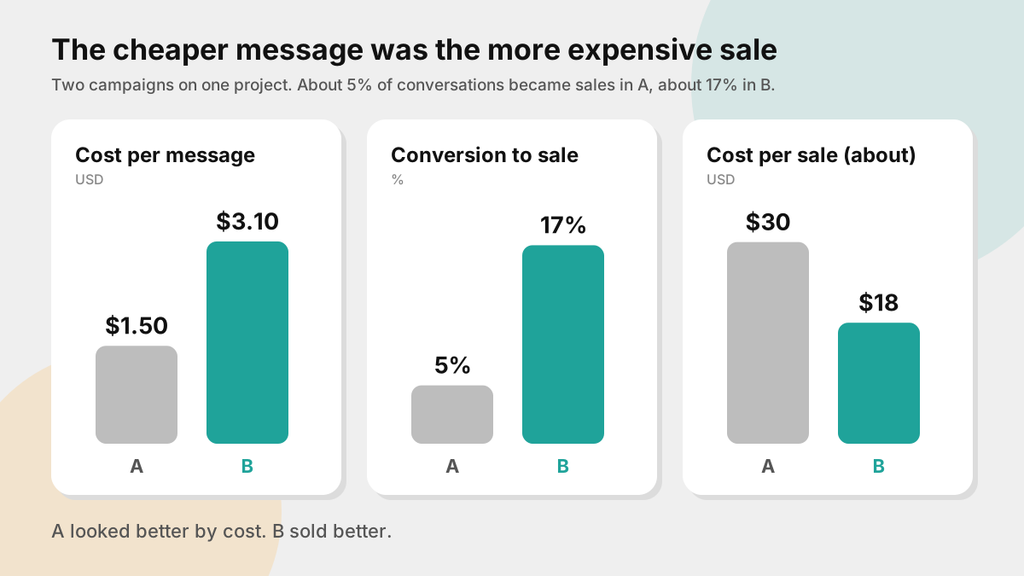
On one project there were two different campaigns. One cost about 1.50 USD per message. The other cost about 3.10 USD. The first one looked clearly better.
Then we looked at what happened after the message. About 5% of the conversations from the cheaper campaign became sales. From the more expensive one, about 17% did. Divide the cost per message by the conversion rate and you get roughly 30 USD per sale against 18 USD. The ad that looked like the failure was the better one.
Seeing this was not easy. Once a lead turns into a sale, it is hard to say where the sale really came from. We found the difference by changing things in the ads, such as the content and the template messages, and watching what moved. After that, we worked more closely with the sales team and strengthened tracking and reporting, so we would know what actually brings value to the business.
A lesson about pressure
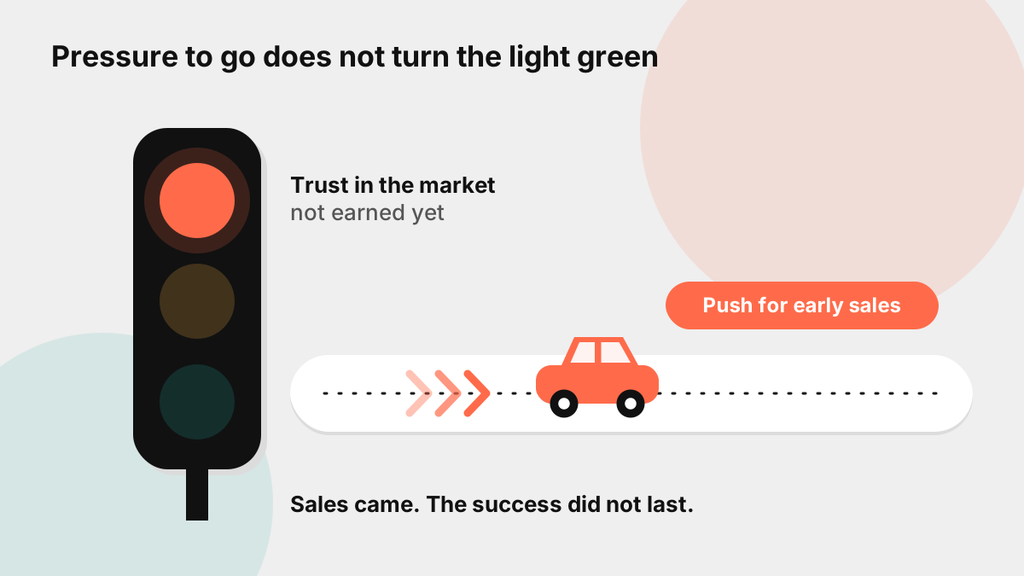
The hardest lesson of those early months was about pressure. A retail brand I worked with sold mostly branded products. The client chose a different path from the one I recommended and pushed for early sales, before the brand had earned any trust in the market. Sales did come. The success did not last.
That experience is a big reason I hold the week-one rule so firmly: decide from data, not from pressure.
I turned this process into a two-page checklist with tick boxes for every stage and a table for adapting it to different kinds of business. Print it or keep it beside you while you work.
Leave a Reply